
BCG Skillbuilding at NGS 2026
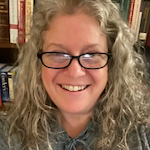 Jennifer Zinck, CG®, CGL®, AG®, AGL®
"Hidden Histories: Extraordinary Insights from Ordinary Records"
Please welcome guest blogger - Jill Morelli, CG®, CGL®
I recently attended the National Genealogical Society Family History Conference 2026 (NGS 2026) and it was everything I expected--meeting new friends and hugging old friends; great conversations at the bar; nervousness before presenting; and great content by all the other terrific presenters. The Program Committee did a great job!
Amongst the many standout presentations I attended was "Hidden Histories: Extraordinary Insights from Ordinary Records" by the accomplished Jennifer Zinck, a BCG Skill-building session. The description for her presentation was "Take a fresh look at records through a different lens..." And it did.
Jennifer started the presentation by introducing us to the Genealogy Standards, a Board for Certification of Genealogists (BCG) publication that outlines documenting, researching and writing standards that we should ALL strive to meet. It was clever to use an icon on the slide that specifically addressed the standard that is being covered. Sometimes these presentations on standards can dissolve into a reading of the standard, but the use of the icon and Jennifer's personality kept this part of the presentation from dipping into the swamp.
Next section was to encourage us to evaluate records; analyze systems and construct their meaning. She spoke of this in general but some take-aways for me included the following:
• The goal is to write our findings.
• One source does not provide evidence.
• Broad context can provide support for any piece of evidence and we need to think beyond historical events.
• It's important to ask the right questions.
In the third section she used another clever presentation tool that subdivided the examples by using the name of the person of interest, like Florence or Elizabeth. This personalized the content and was a good contrast to the previous more academic-tone sections. Each of these "named" subsections was a different example of how hidden clues reveal new information or clarify the old, especially when coupled with broad context.
- "Franklin" illustrated the use of the value of deeper investigation into the topics of context and not just the facts related to an individual. This example also was a good one for showing how linkages connecting broad context in topic #1 could lead to other related but different context topic #2 and so on.
- "Elizabeth" was a study in failure to identify gaps or missing the obvious. My big take-away is that we often make (wrong) assumptions about gaps, that lead us to incorrect conclusions.
She summarized her content in a clear way, by challenging us to ask the right questions when researching the law and its impact. Jennifer suggested we use Google Books, HathiTrust and Internet Archive to find the law. One source that I use that was not mentioned is the website of The Advancing Genealogist (https://advancinggenealogist.com/laws-and-statutes-index/). While not all states are covered, a majority are and it is a great service to the genealogical community.
I didn't look over the syllabus until after the presentation and I found it to be well written and a good resource for the future.
Happy hunting!
Jill Morelli. CG®, CGL®, has been a board-certified genealogist since 2017 and is based in Seattle.